USA
USA Brazil
 China
China Croatia
 Europe
 France
 Germany
 Italy
Italy Japan
Japan Latin America
 Netherlands
 Spain
Spain Turkey



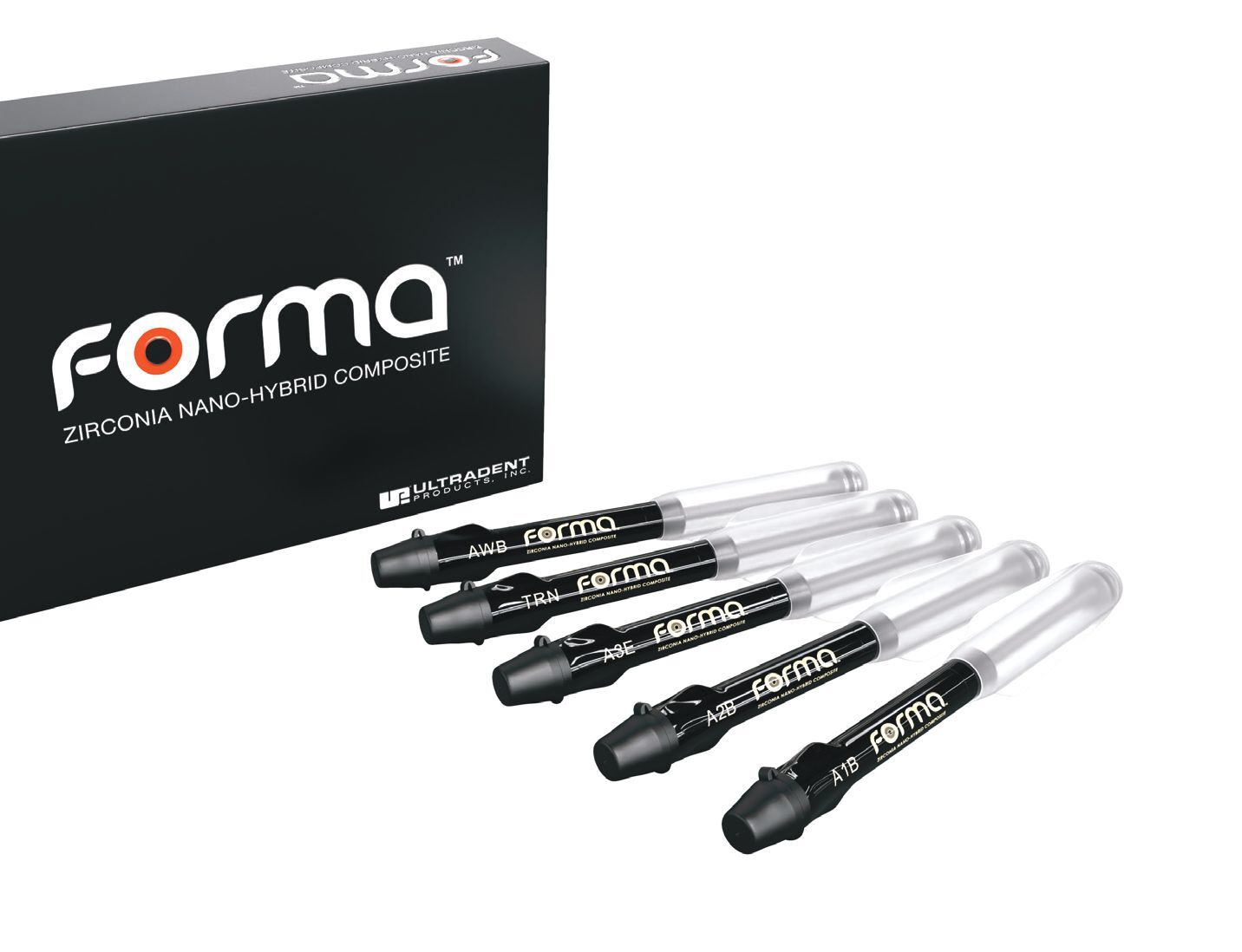
FORMA composite features a zirconia nano-hybrid formula that allows for an exceptionally durable restoration with better initial and retained gloss. The silanated zirconia particles in FORMA composite are rounded, giving a beautiful high gloss finish and enhanced durability to the restoration—making FORMA composite ideal for both anterior and posterior applications.
It is available in a full range of shades with ideal translucency, opacity, and fluorescence when compared with the natural characteristics of the tooth. FORMA composite’s excellent optical properties enable clinicians to reach the ideal balance between esthetics of direct restorations and dental substrates with the use of only one body color (OneStepColor), or through a combination of dentin, enamel, and effect shades for more specific procedures. A zirconia nano-hybrid formula gives FORMA composite excellent mechanical properties, high strength, and excellent working consistency. It is easy to sculpt and simple to polish, offering beautiful final esthetics.
Here is a Clinical Case published by Dr. José Carlos Garófalo on FORMA

DR. JOSÉ CARLOS GARÓFALO
Professor José Carlos Garófalo studied at the University of São Paulo Dental School. He holds a Master of Science and a Specialist degree in Restorative Dentistry by the same institution. He is co-owner of Eco Academy, Professor and coordinator of continuing educational, specialization and immersion courses in Restorative Dentistry. He is the author of the book Atlas of Laminated Veneers (1998).
1. Exchange of unsatisfactory restorations on elements 15 and 16.
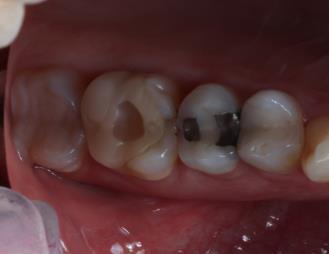
2. After teeth prep. Cl II for 15 and indirect overlay restoration for 16.
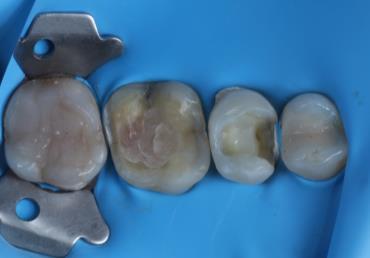
3. 15: a ring and matrix system were used to transform cl II in cl I, using Forma A2B, light cured with Valo Grand.
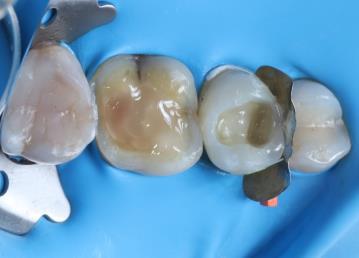
4. 15: Forma A2B was applied using incremental technique. An ochre pigment was used to characterize the fissures.
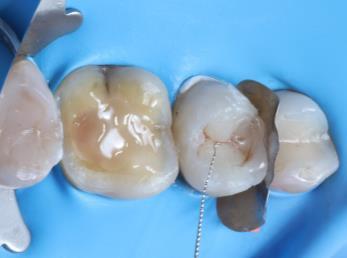
5. After A2E last layer, light curing using Valo Grand. Sectional matrix was removed. Tooth was finished and polished using Jiffy system.
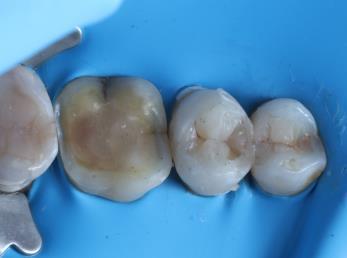
6. Onlay prep impression using Panasil®.
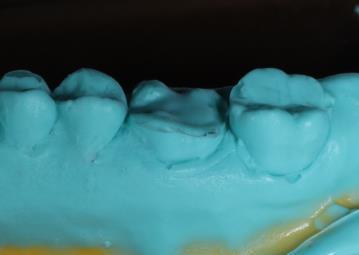
7. Indirect restoration using Forma A2B, ochre pigment on the fissures and Forma A1E. Advantages: better light curing, outside mouth, better proximal contacts.
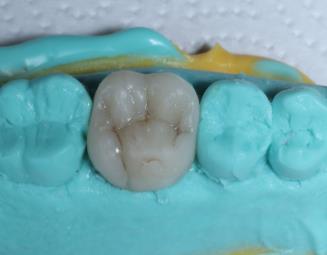
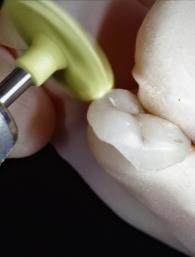
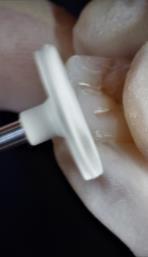
8. After occlusal adjustments, finishing and polishing using Jiffy polishers' discs.
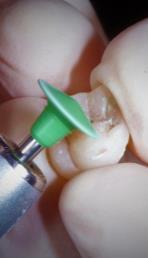
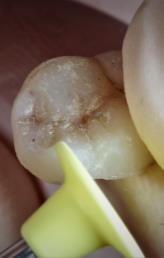
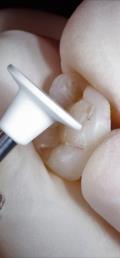
9. Final polishing using Jiffy Natural.
10. Cementation using Universal resin cement.
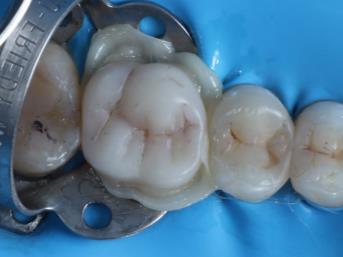
11. After cement excess removal and light curing using Valo Grand (all faces).
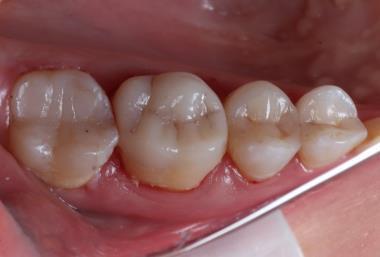
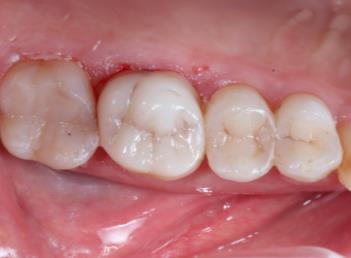
12. Final. Occlusal view.