USA
USA Brazil
 China
China Croatia
 Europe
 France
 Germany
 Italy
Italy Japan
Japan Latin America
 Netherlands
 Spain
Spain Turkey



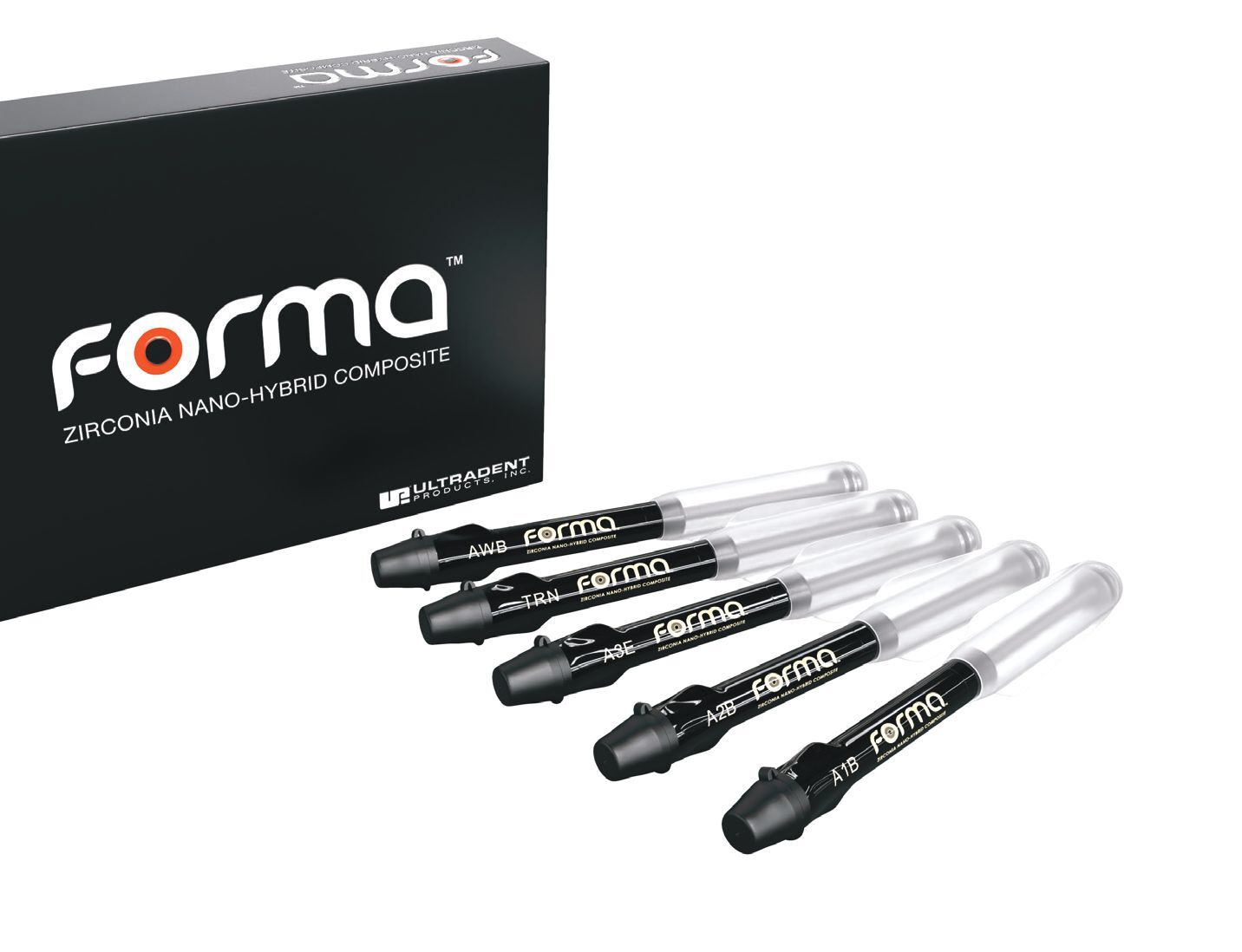
FORMA composite features a zirconia nano-hybrid formula that allows for an exceptionally durable restoration with better initial and retained gloss. The silanated zirconia particles in FORMA composite are rounded, giving a beautiful high gloss finish and enhanced durability to the restoration—making FORMA composite ideal for both anterior and posterior applications.
It is available in a full range of shades with ideal translucency, opacity, and fluorescence when compared with the natural characteristics of the tooth. FORMA composite’s excellent optical properties enable clinicians to reach the ideal balance between esthetics of direct restorations and dental substrates with the use of only one body color (OneStepColor), or through a combination of dentin, enamel, and effect shades for more specific procedures. A zirconia nano-hybrid formula gives FORMA composite excellent mechanical properties, high strength, and excellent working consistency. It is easy to sculpt and simple to polish, offering beautiful final esthetics.
Here is a Clinical Case published by Dr. Jorge Eustáquio on FORMA™

DR. MARCOS BARCELEIRO
Professor Marcos Barceleiro holds a Specialization, a Master of Science and a PhD degree in Operative Dentistry (Brazil). He is a Full Professor in Restorative Dentistry at the Fluminense Federal University (Nova Friburgo / Brazil) and has also authored more than 40 scientific articles in his career. He is the current vice president of the Brazilian Group of Operative Dentistry Professors.
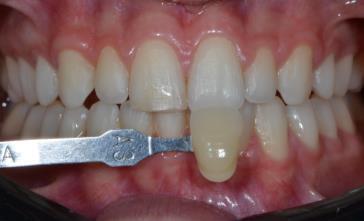
1. After orthodontic treatment, patient wanted to whiten his teeth. Using Opalescence® Boost in two sessions (48h interval between them), teeth A3 became A1, highlighting the fact that the patient did not report any sensitivity during the treatment.
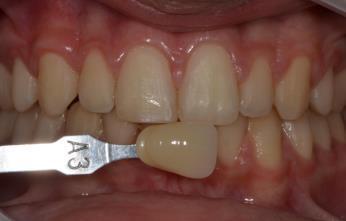
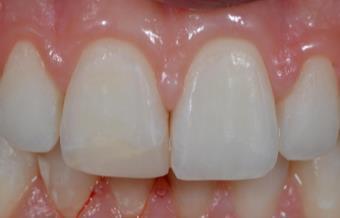
2. Notice that class IV on 11 needed to be replaced after whitening treatment. 15 days interval was considered to this replacement.
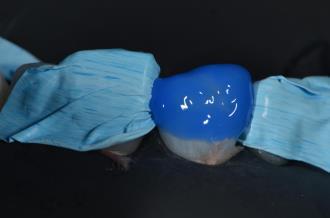
3. After rubber dam isolation, previous restoration was removed, and the enamel was etched using Ultra-Etch™.
4. After bonding, Forma™ incisalcisal shade was used for palatal shell.
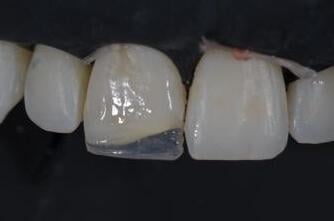
5. Opaque halo using Forma™ A1D.
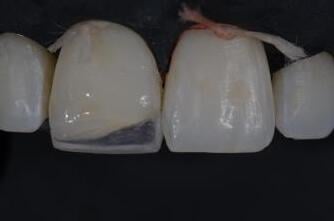
6. Mamelons using Forma™ A1D.
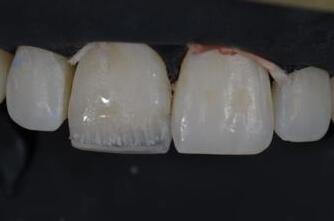
7. Forma™ Incisal applied between the mamelons, for translucent incisal effect.
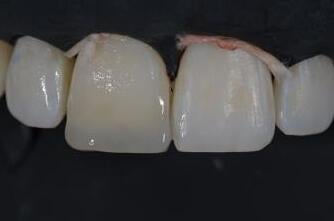
8. Final layer, using Forma™ A1E. All layers were light cured using Valo™ Grand, for 20s each on standard mode.
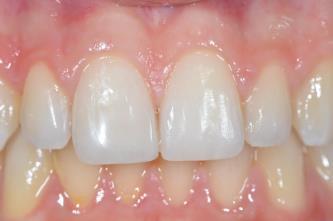
9. Finishing and polishing, using multilaminate carbide tip, Jiffy™ Polisher and Jiffy™ Natural, followed by Diamond Polish.
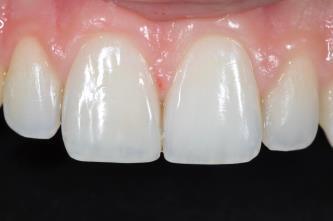
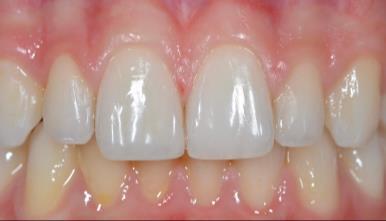
10. Final aspect.